Εγκύκλιος του ΥΠΕΝ δίνει αναλυτικές διευκρινίσεις για τα Πιστοποιητικά Ενεργειακής Απόδοσης και τις Μελέτες Ενεργειακής Απόδοσης στις οικοδομικές άδειες, τα νέα και υφιστάμενα κτίρια ενώ βάζει νέους κανόνες και πρόστιμα για τις μισθώσεις και πωλήσεις ακινήτων.
H εγκύκλιος, που υπογράφει ο ΥΠΕΝ Κωστής Χατζηδάκης, με θέμα “διευκρινίσεις για την εφαρμογή του ν.4122/2013 για την «Ενεργειακή Απόδοση Κτιρίων” εκδίδεται με σκοπό την πληρέστερη ενημέρωση ως προς τις ελάχιστες απαιτήσεις ενεργειακής απόδοσης, το Πιστοποιητικό Ενεργειακής Απόδοσης (ΠΕΑ), τη Μελέτη Ενεργειακής Απόδοσης (ΜΕΑ), την ενημέρωση μισθωτών – αγοραστών, τις υποχρεώσεις μεσιτών, διαφημιστών, Τύπου, ιδιοκτητών καθώς και της ΑΑΔΕ.
Καμπάνες και αλλαγές στις μισθώσεις και πωλήσεις ακινήτων
Η εγκύκλιος του ΥΠΕΝ αναφέρει ότι από την 1η Ιανουαρίου 2021 κάθε κτίριο ή κτιριακή μονάδα που διατίθεται προς πώληση ή προς μίσθωση, απαιτείται να έχει ήδη ΠΕΑ ώστε να δηλώνεται ο δείκτης ενεργειακής απόδοσης (ενεργειακή κατηγορία), όπως αυτός προκύπτει από το ΠΕΑ, σε όλες τις εμπορικές διαφημίσεις και καταχωρήσεις, δηλαδή σε κάθε αγγελία στον τύπο ή σε ηλεκτρονικά μέσα, όπως και σε κάθε ανάρτηση – αναφορά στα μεσιτικά γραφεία δηλώνεται με ευκρίνεια η ενεργειακή κατηγορία του κτιρίου ώστε η ενεργειακή κατάταξη της ιδιοκτησίας να αποτελεί βασικό συγκριτικό στοιχείο για την διαμόρφωση της επιλογής του ενδιαφερόμενου αγοραστή / ενοικιαστή. Συνεπώς κάθε κτίριο ή κτιριακή μονάδα για να μπει στη διαδικασία της διάθεσης πρέπει να έχει εκ των προτέρων έγκυρο ΠΕΑ.
Σε περίπτωση μη έκδοσης ΠΕΑ (ενώ οφείλεται), αμέλειας προσυμβατικής ενημέρωσης του αντισυμβαλλόμενου, διαφήμισης – μεσιτείας χωρίς αναφορά της ενεργειακής κατάταξης της κτιριακής μονάδας/ κτιρίου, μη καταχώρισης των στοιχείων του ΠΕΑ στις εφαρμογές της ΑΑΔΕ, επιβάλλεται, σύμφωνα με το άρθρο 20 του ν.4122/2013, πρόστιμο σε βάρος του κατά νόμο υπόχρεου από διακόσια (200) έως δέκα χιλιάδες (10.000) ευρώ.
Τα μεσιτικά γραφεία μπορούν να αναλαμβάνουν εντολή μεσιτείας υπό την προϋπόθεση ότι πριν την οποιαδήποτε διαφήμιση και καταχώριση (τύπο, διαδίκτυο, ακόμη και σε αναρτήσεις και καταλόγους στην έδρα τους) θα έχουν τα στοιχεία έγκυρου ΠΕΑ.
Οι διαφημιστές, οι εφημερίδες και οι ηλεκτρονικές σελίδες αγγελιών δεν θα παραλαμβάνουν αγγελίες προς δημοσίευση που δεν θα έχουν δήλωση ενεργειακής κατηγορίας.
Η εφαρμογή των ανωτέρω, είναι υποχρεωτική μόνο για κτίρια ή κτιριακές μονάδες που έχουν υποχρέωση έκδοσης ΠΕΑ.
Τι προβλέπει η εγκύκλιος του ΥΠΕΝ
H εγκύκλιος του ΥΠΕΝ με θέμα “διευκρινίσεις για την εφαρμογή του ν.4122/2013 για την «Ενεργειακή Απόδοση Κτιρίων” (δείτε συνοπτική παρουσίαση και στο τέλος της δημοσίευσης σύνδεσμο για ολόκληρη την εγκύκλιο) περιλαμβάνει τις ακόλουθες ρυθμίσεις:
1.Ελάχιστες Απαιτήσεις Ενεργειακής Απόδοσης Νέων Κτιρίων (άρθρα 4 & 6)
Όλα τα νέα κτίρια ή κτιριακές μονάδες πρέπει να πληρούν τις ελάχιστες απαιτήσεις ενεργειακής απόδοσης όπως καθορίζονται στον ΚΕΝΑΚ (σχετ. γ’) και εξειδικεύονται στην ΤΟΤΕΕ 20701-1/2017 «Αναλυτικές εθνικές προδιαγραφές παραμέτρων για τον υπολογισμό της ενεργειακής απόδοσης κτιρίων και την έκδοση του πιστοποιητικού ενεργειακής απόδοσης» (σχετ. ε’) και ιδίως στο κεφάλαιο 7 αυτής. Εξαιρούνται από την τήρηση των ελάχιστων απαιτήσεων οι κάτωθι κατηγορίες κτιρίων (παρ. 7 του άρθρου 4 του σχετ. α’) :
α) κτίρια προστατευόμενα ως μέρος συγκεκριμένου περιβάλλοντος ή λόγω της ιδιαίτερης αρχιτεκτονικής ή ιστορικής τους αξίας, στον βαθμό που η συμμόρφωση προς ορισμένες ελάχιστες απαιτήσεις ενεργειακής απόδοσης θα αλλοίωνε κατά τρόπο μη αποδεκτό το χαρακτήρα ή την εμφάνισή τους.
β) κτίρια χρησιμοποιούμενα ως χώροι λατρείας
γ) βιομηχανικές εγκαταστάσεις, βιοτεχνίες, επαγγελματικά εργαστήρια, αποθήκες.
δ) προσωρινής χρήσης κτίρια που η διάρκεια χρήσης των οποίων με βάση το σχεδιασμό τους δεν υπερβαίνει τα δύο (2) έτη, κτίρια αγροτικών χρήσεων – πλην κατοικιών – με χαμηλές ενεργειακές απαιτήσεις και αγροτικά κτίρια – πλην κατοικιών – που χρησιμοποιούνται από τομέα καλυπτόμενο από εθνική συμφωνία που αφορά την ενεργειακή απόδοση κτιρίων.
ε) μεμονωμένα κτίρια, με συνολική ωφέλιμη επιφάνεια μικρότερη από πενήντα τετραγωνικά μέτρα (50 τ.μ.), για τα οποία ισχύουν μόνο οι ελάχιστες απαιτήσεις που αφορούν σε δομικά στοιχεία του κτιριακού κελύφους.
ζ) Περιπτώσεις ιδιοκτησιών οι οποίες εκ της πολεοδομικής χρήσης δεν είναι «δομικά έργα» ή δεν έχουν την έννοια του κτιρίου ή κτιριακής μονάδας
Περιπτώσεις λειτουργικά ανεξάρτητων προσθηκών καθ’ ύψος ή κατ’ επέκταση, εξετάζονται λαμβανομένων υπόψη των διατάξεων για τα νέα κτίρια ή κτιριακές μονάδες.
2. Ελάχιστες Απαιτήσεις Ενεργειακής Απόδοσης Υφιστάμενων Κτιρίων (άρθρο 7)
Τα υφιστάμενα κτίρια ή κτιριακές μονάδες που ανακαινίζονται ριζικά εξετάζονται συνολικά και όχι μόνο από ενεργειακή σκοπιά ώστε να συμπεριλαμβάνονται στη ΜΕΑ:
α) τα απαραίτητα μέτρα για την εξασφάλιση υγιεινών κλιματικών συνθηκών εσωτερικού χώρου,
β) η εξέταση των συνθηκών παθητικής και ενεργητικής πυροπροστασίας
γ) η αξιολόγηση των κινδύνων που πιθανά επηρεάζουν τη στατική επάρκειά τους.
3. Ζεστό νερό χρήσης (ΖΝΧ) από ηλιοθερϋΐκά συστήματα (άρθρο 6)
Στα νέα κτίρια ή κτιριακές μονάδες, είναι υποχρεωτική η κάλυψη μέρους (60%) των αναγκών σε ΖΝΧ από ηλιοθερμικά συστήματα, εκτός από τις περιπτώσεις β’, γ’ και δ’ της παρ. 7 του άρθρου 4 του σχετ. α’ καθώς και για τις περιπτώσεις ιδιοκτησιών οι οποίες εκ της πολεοδομικής χρήσης δεν έχουν την έννοια του κτιρίου ή κτιριακής μονάδας (αναλύονται στην παρ. 6 της παρούσας). Τα κτίρια ωφέλιμης επιφάνειας μικρότερης των 50 τ.μ. δεν εξαιρούνται από την απαίτηση εγκατάστασης ηλιοθερμικών συστημάτων για ΖΝΧ.
4.Πιστοποιητικό Ενεργειακής Απόδοσης (ΠΕΑ) (άρθρο 11)
Το ΠΕΑ είναι σημαντικό εργαλείο για την κατανόηση και αξιολόγηση της ενεργειακής απόδοσης των κτιρίων, αφού εμπεριέχει πληροφορίες σχετικά με την τυπική ενεργειακή απόδοση του κτιρίου αλλά και οικονομικά συμφέρουσες συστάσεις σχετικά με τη βελτίωση της απόδοσης του.
Σημειώνεται ότι, η επιφάνεια κτιριακής μονάδας όπως αναγράφεται στο ΠΕΑ δεν είναι απαραίτητο να συμπίπτει με την επιφάνεια της κάθε ιδιοκτησίας (όπως δηλώνεται στα συμβόλαια, οικοδομική άδεια, περουσιολόγιο κλπ), διότι ο τρόπος μέτρησης της επιφάνειας – των εξωτερικών ορίων του κτιρίου / κτιριακής μονάδας, είναι διαφορετικός κατά τον ΚΕΝΑΚ από τον Οικοδομικό Κανονισμό. Επισημαίνεται ότι η ωφέλιμη επιφάνεια που αναγράφεται στο ΠΕΑ, μπορεί να περιλαμβάνει επιφάνειες οι οποίες δεν προσμετρώνται στον σ.δ. (παρ.6 , άρθρο 11 του ν. 4067/2012).
5.Υποχρέωση έκδοσης ΠΕΑ (άρθρο 12)
Η έκδοση Πιστοποιητικού Ενεργειακής Απόδοσης (ΠΕΑ) είναι υποχρεωτική:
α) μετά την ολοκλήρωση κατασκευής νέου κτιρίου ή κτιριακής μονάδας και αφορά τα κτίρια με οικοδομική άδεια που εμπίπτουν στις διατάξεις του ΚΕΝΑΚ (οι άδειες που εκδόθηκαν μετά την έναρξη εφαρμογής του ΚΕΝΑΚ 2010 και εμπίπτουν στις διατάξεις του),
β) μετά την ολοκλήρωση ριζικής ανακαίνισης κτιρίου ή κτιριακής μονάδας,
γ) κατά την πώληση κτιρίου ή κτιριακής μονάδας, μέχρι την ενεργοποίηση της Ταυτότητας του Κτιρίου,
δ) κατά τη μίσθωση (μακροχρόνια, βραχυχρόνια, υπεκμίσθωση) σε νέο ενοικιαστή κτιρίου ή κτιριακής μονάδας, μέχρι την ενεργοποίηση της Ταυτότητας του Κτιρίου,
ε) για κτίρια συνολικής επιφάνειας άνω των διακοσίων πενήντα τετραγωνικών μέτρων (250 τ.μ.), τα οποία χρησιμοποιούνται από υπηρεσίες του δημόσιου και ευρύτερου δημόσιου τομέα, όπως αυτός ορίζεται κάθε φορά, και τα οποία επισκέπτεται συχνά το κοινό. Η υπαγωγή στη κατηγορία αυτή αφορά κάθε υπηρεσία που είναι ανοιχτή στο κοινό όπως οι διοικητικές υπηρεσίες των ΟΤΑ, τα σχολικά συγκροτήματα, υπουργεία. Αντίθετα, δεν υπάγονται υπηρεσίες που πρακτικά δεν συνέρχεται το κοινό, όπως τα κτίρια που στεγάζουν τις υπηρεσίες καθαριότητας των ΟΤΑ.
6.Εξαιρέσεις από την υποχρέωση έκδοσης ΠΕΑ (άρθρο 12, παρ. 6 & 7)
Τα κτίρια που χρησιμοποιούνται ως χώροι λατρείας και τα μεμονωμένα κτίρια, με συνολική ωφέλιμη επιφάνεια μικρότερη από πενήντα τετραγωνικά μέτρα (50 τ.μ.) εξαιρούνται από την υποχρέωση έκδοσης ΠΕΑ (περιπτώσεις β’ και ε’ της παρ. 7 του άρθρου 4 του σχετ. α’). Όμως, η έκδοση ΠΕΑ είναι δυνατή εφόσον το επιθυμεί ο ιδιοκτήτης.
Δεν επιτρέπεται η έκδοση ΠΕΑ για τις ακόλουθες περιπτώσεις (η ανάλυση – επεξήγηση των περιπτώσεων της παρ. 7 του άρθρου 4 του σχετ. α’ γίνεται στην παρ. 1 της παρούσας):
α) κτίρια που χρησιμοποιούνται ως βιομηχανικές εγκαταστάσεις, βιοτεχνίες, επαγγελματικά εργαστήρια, αποθήκες – logistics (περίπτωση γ’ της παρ. 7 του άρθρου 4 του σχετ. α’).
β) κτίρια που η διάρκεια χρήσης τους με βάση το σχεδιασμό τους δεν υπερβαίνει τα δύο (2) έτη (περίπτωση δ’ της παρ. 7 του άρθρου 4 του σχετ. α’), όπως εργοταξιακοί οικίσκοι (αφορά τη διάρκεια και όχι τα υλικά κατασκευής).
γ) κτίρια αγροτικών χρήσεων – πλην κατοικιών – με χαμηλές ενεργειακές απαιτήσεις και αγροτικά κτίρια – πλην κατοικιών – που χρησιμοποιούνται από τομέα καλυπτόμενο από εθνική συμφωνία που αφορά την ενεργειακή απόδοση κτιρίων (περίπτωση δ’ της παρ. 7 του άρθρου 4 του σχετ. α’), όπως τα αγροτικά σιλό κ.ά.
δ) ιδιοκτησίες οι οποίες εκ της πολεοδομικής χρήσης δεν είναι «δομικά έργα» ή δεν έχουν την έννοια του κτιρίου / κτιριακής μονάδας .
ε) για κάθε κατασκευή (για να θεωρηθεί μια κατασκευή κτίριο πρέπει να είναι ολοκληρωμένη, άρτια και να μπορεί να επιτελέσει τη λειτουργία για την οποία προορίζεται) που ενώ η πολεοδομική του χρήση εμπίπτει στις κατηγορίες κτιρίων που απαιτείται / προβλέπεται κατανάλωση ενέργειας για τη ρύθμιση των εσωτερικών κλιματικών συνθηκών – προκειμένου να διασφαλιστεί η άνεση των χρηστών τους, εντούτοις λόγω της ειδικής κατάστασης που βρίσκεται, δεν πληροί την έννοια του κτιρίου ή της κτιριακής μονάδας
7. Ενημέρωση νέων αγοραστών η ενοικιαστών για την ενεργειακή απόδοση κτιρίου διαμέσου του ΠΕΑ (άρθρα 11 & 12)
Η ενεργειακή απόδοση και κατάταξη του κτιρίου – κτιριακής μονάδας είναι ένα σημαντικό στοιχείο που λαμβάνεται υπόψη κατά την έρευνα της κτηματαγοράς από τους νέους αγοραστές ή ενοικιαστές.
Κατά την διαδικασία της πώλησης ή της μίσθωσης κτιρίων ή κτιριακών μονάδων, επιδεικνύεται από τον ιδιοκτήτη ή εκμισθωτή ή άλλο εξουσιοδοτημένο πρόσωπο το ΠΕΑ ή αντίγραφό του, στον υποψήφιο νέο αγοραστή ή ενοικιαστή και παραδίδεται το αντίγραφό του στο νέο αγοραστή ή ενοικιαστή. Συνεπώς, για κάθε νέα μίσθωση κτιρίου ή κτιριακής μονάδας, πρέπει να ενημερώνεται ο ενοικιαστής για την ενεργειακή απόδοση και κατάταξη του μισθίου (παραλαμβάνοντας αντίγραφο του ΠΕΑ) πριν τη σύνταξη του συμφωνητικού. Η υποχρέωση ενημέρωσής του, ισχύει ήδη από 9.1.2011 κατά τη νέα μίσθωση κτιρίων και από την 9.7.2011 κατά τη νέα μίσθωση κτιριακών μονάδων.
Η υποχρέωση έκδοσης ΠΕΑ και ενημέρωσης του ενοικιαστή ισχύει τόσο για τις μακροχρόνιες μισθώσεις όσο και για τις υπεκμισθώσεις και τις βραχυχρόνιες μισθώσεις. Η ύπαρξη του ΠΕΑ κατά τη μίσθωση (μακροχρόνια, βραχυχρόνια, υπεκμίσθωση) επιβεβαιώνεται με την καταχώριση των στοιχείων του στην αντίστοιχη διαδικτυακή εφαρμογή της ΑΑΔΕ.
Ως μίσθωση (μακροχρόνια, βραχυχρόνια, υπεκμίσθωση) ακινήτου νοείται η σύμβαση με την οποία ο εκμισθωτής αναλαμβάνει την υποχρέωση να παραχωρήσει τη χρήση του κτιρίου ή της κτιριακής μονάδας (μίσθιο) στο μισθωτή και ο μισθωτής να καταβάλει το συμφωνημένο τίμημα ως μίσθωμα για όσο χρόνο διαρκεί η μισθωτική σχέση.
Η δωρεάν παραχώρηση δεν είναι μίσθωση και δεν απαιτείται η έκδοση ΠΕΑ (δεν εξετάζεται η σχέση των αντισυμβαλλόμενων). Η παραχώρηση ή ενοικίαση τμήματος κτιριακής μονάδας δεν απαιτεί την έκδοση ΠΕΑ δεδομένου ότι δεν είναι δυνατή η έκδοση ΠΕΑ για μέρος κτιριακής μονάδας (π.χ. ενοικίαση υπνοδωματίου σε διαμέρισμα, ή τμήματος διαμερίσματος για χρήση επαγγελματικής έδρας ελεύθερου επαγγελματία), όπου «κτιριακή μονάδα» είναι το τμήμα, ο όροφος ή διαμέρισμα εντός κτιρίου, που έχει σχεδιαστεί ή υποστεί μετατροπή ώστε να χρησιμοποιείται χωριστά.
8. Διαφημίσεις – μεσιτικές υπηρεσίες (άρθρο 12, παρ. 4)
Από την 1η Ιανουαρίου 2021 κάθε κτίριο ή κτιριακή μονάδα που διατίθεται προς πώληση ή προς μίσθωση, απαιτείται να έχει ήδη ΠΕΑ ώστε να δηλώνεται ο δείκτης ενεργειακής απόδοσης (ενεργειακή κατηγορία), όπως αυτός προκύπτει από το ΠΕΑ, σε όλες τις εμπορικές διαφημίσεις και καταχωρήσεις, δηλαδή σε κάθε αγγελία στον τύπο ή σε ηλεκτρονικά μέσα, όπως και σε κάθε ανάρτηση – αναφορά στα μεσιτικά γραφεία δηλώνεται με ευκρίνεια η ενεργειακή κατηγορία του κτιρίου ώστε η ενεργειακή κατάταξη της ιδιοκτησίας να αποτελεί βασικό συγκριτικό στοιχείο για την διαμόρφωση της επιλογής του ενδιαφερόμενου αγοραστή / ενοικιαστή. Συνεπώς κάθε κτίριο ή κτιριακή μονάδα για να μπει στη διαδικασία της διάθεσης πρέπει να έχει εκ των προτέρων έγκυρο ΠΕΑ.
Τα μεσιτικά γραφεία μπορούν να αναλαμβάνουν εντολή μεσιτείας υπό την προϋπόθεση ότι πριν την οποιαδήποτε διαφήμιση και καταχώριση (τύπο, διαδίκτυο, ακόμη και σε αναρτήσεις και καταλόγους στην έδρα τους) θα έχουν τα στοιχεία έγκυρου ΠΕΑ.
Οι διαφημιστές, οι εφημερίδες και οι ηλεκτρονικές σελίδες αγγελιών δεν θα παραλαμβάνουν αγγελίες προς δημοσίευση που δεν θα έχουν δήλωση ενεργειακής κατηγορίας.
Η εφαρμογή των ανωτέρω, είναι υποχρεωτική μόνο για κτίρια ή κτιριακές μονάδες που έχουν υποχρέωση έκδοσης ΠΕΑ.
9. Έλεγχος ενκυρότητας ΠΕΑ
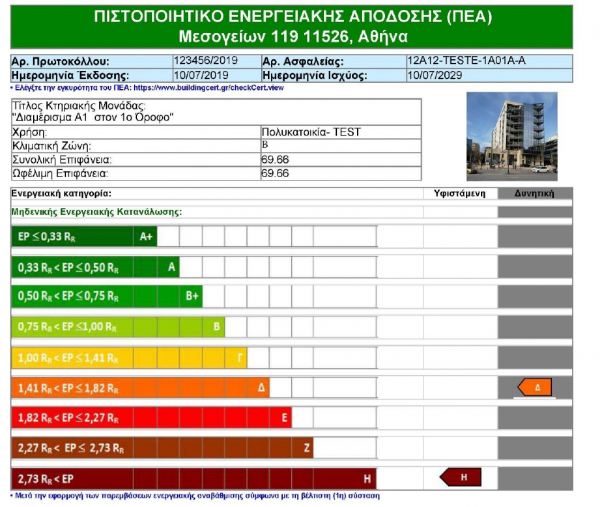
Η εγκυρότητα του ΠΕΑ μπορεί να επαληθευθεί βάσει του αριθμού πρωτοκόλλου, της ημερομηνίας έκδοσης και του δεκαεξαψήφιου αριθμού ασφαλείας (βλ. εικόνα 1), καταχωρώντας τα εν λόγω στοιχεία στο σχετικό πεδίο «Έλεγχος Εγκυρότητας ΠΕΑ:» του Αρχείου Ενεργειακών Επιθεωρήσεων στην ιστοσελίδα www.buildinacert.ar.
Εικόνα: Απόσπασμα 1ης σελίδας ΠΕΑ
10. Παράβαση νομοθεσίας – επιβολή προστίμων (άρθρο 20)
Σε περίπτωση μη έκδοσης ΠΕΑ (ενώ οφείλεται), αμέλειας προσυμβατικής ενημέρωσης του αντισυμβαλλόμενου, διαφήμισης – μεσιτείας χωρίς αναφορά της ενεργειακής κατάταξης της κτιριακής μονάδας/ κτιρίου, μη καταχώρισης των στοιχείων του ΠΕΑ στις εφαρμογές της ΑΑΔΕ, επιβάλλεται, σύμφωνα με το άρθρο 20 του ν.4122/2013, πρόστιμο σε βάρος του κατά νόμο υπόχρεου από διακόσια (200) έως δέκα χιλιάδες (10.000) ευρώ.
11. Ο οικοδομικές Άδειες – Μελέτη Ενεργειακής Απόδοσης (άρθρα 9 & 21)
Για την έκδοση οικοδομικής άδειας νέου ή ριζικά ανακαινιζόμενου υφιστάμενου κτιρίου ή κτιριακής μονάδας, εκπονείται και υποβάλλεται η Μελέτη Ενεργειακής Απόδοσης (ΜΕΑ), όπου το περιεχόμενο της εξειδικεύεται με τον ΚΕΝΑΚ. Δεν εκπονείται ΜΕΑ μόνο για κτίριο ή κτιριακή μονάδα που δεν είναι δυνατή η ανάλυση – αξιολόγηση της απόδοσης του ενεργειακού σχεδιασμού του, ήτοι για κτίρια που δεν επιτρέπεται η έκδοση ΠΕΑ (όπως αναλυτικά προσδιορίζονται στην παρ. 6 της παρούσας).
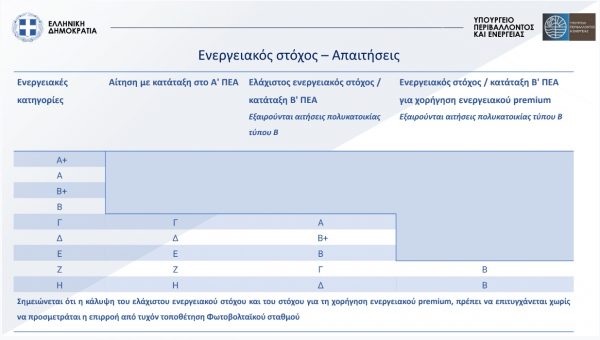
Η ελάχιστη απαιτούμενη ενεργειακή κατάταξη του κτιρίου / κτιριακής μονάδας όπως υπολογίζεται στην ΜΕΑ, καθορίζεται ανάλογα με τη κατηγορία του κτιρίου, ως εξής:
α) Τα νέα κτίρια κατοικιών, για τα οποία εκδίδεται οικοδομική άδεια έως τη 31η Μαΐου 2021, πρέπει να κατατάσσονται τουλάχιστον στην ενεργειακή κατηγορία Β+ (παρ. 1 του άρθρου 21 του σχετ. α’). Προσθήκη κτιριακής μονάδας (όπως και η ριζική ανακαίνιση) σε αυτά τα κτίρια κατοικίας, θα πρέπει να κατατάσσεται στην ίδια ενεργειακή κατηγορία. Προσθήκη κτιριακής μονάδας σε υφιστάμενα κτίρια, θα πρέπει να κατατάσσεται στην ενεργειακή κατηγορία Β+. Υφιστάμενα κτίρια ή κτιριακές μονάδες που υπόκεινται σε ριζική ανακαίνιση, θα πρέπει να κατατάσσονται στην ενεργειακή κατηγορία Β.
β) Τα νέα κτίρια κατοικιών, για τα οποία εκδίδεται οικοδομική άδεια μετά τη 31η Μαΐου 2021 πρέπει να είναι ΚΣΜΚΕ (παρ. 1 του άρθρου 21 του σχετ. α’), συνεπώς να κατατάσσονται τουλάχιστον στην ενεργειακή κατηγορία Α. Η προσθήκη κτιριακής μονάδας (όπως και η ριζική ανακαίνιση) σε αυτά τα κτίρια, θα πρέπει να κατατάσσεται στην ίδια ενεργειακή κατηγορία.
γ) Τα νέα κτίρια τριτογενούς τομέα, για τα οποία υποβάλλεται αίτηση για οικοδομική άδεια έως τη 31η Δεκεμβρίου 2020, πρέπει να κατατάσσονται τουλάχιστον στην ενεργειακή κατηγορία Β. Προσθήκη κτιριακής μονάδας (όπως και η ριζική ανακαίνιση) σε αυτά τα κτίρια του τριτογενούς τομέα, πρέπει να κατατάσσεται τουλάχιστον στην ενεργειακή κατηγορία Β.
δ) Τα νέα κτίρια τριτογενούς τομέα, για τα οποία υποβάλλεται αίτηση για οικοδομική άδεια από την 1η Ιανουαρίου 2021 και έπειτα πρέπει να είναι ΚΣΜΚΕ (άρθρο 9 του σχετ. α’), συνεπώς να κατατάσσονται τουλάχιστον στην ενεργειακή κατηγορία Α. Η προσθήκη κτιριακής μονάδας (όπως και η ριζική ανακαίνιση) σε αυτά τα κτίρια, θα πρέπει να κατατάσσεται στην ίδια ενεργειακή κατηγορία.
ε) Τα νέα κτίρια που είναι ιδιοκτησία του Δημοσίου και του ευρύτερου δημόσιου τομέα και προορίζονται για στέγαση υπηρεσιών του, ήδη από 1.1.2019, πρέπει να είναι «Κτίρια Σχεδόν Μηδενικής Κατανάλωσης Ενέργειας» (ΚΣΜΚΕ) και να κατατάσσονται τουλάχιστον στην ενεργειακή κατηγορία Α (σχετ. στ’ και άρθρο 9 του σχετ. α’). Η προσθήκη κτιριακής μονάδας (όπως και η ριζική ανακαίνιση) σε αυτά τα κτίρια, θα πρέπει να κατατάσσεται στην ίδια ενεργειακή κατηγορία. Η προσθήκη κτιριακής μονάδας (όπως και η ριζική ανακαίνιση) σε υφιστάμενα κτίρια του Δημοσίου, θα πρέπει να κατατάσσεται στην ενεργειακή κατηγορία Β.
Για την έκδοση του ΠΕΚ κτιρίου από την ΥΔΟΜ απαιτείται το ΠΕΑ και το αντίστοιχο πόρισμα του ενεργειακού επιθεωρητή (παρ. 2 και 3 του άρθρου 21 του σχετ. α’). Για να θεωρείται ολοκληρωμένη η κατασκευή πρέπει να έχει κατασκευαστεί πλήρως τόσο το κέλυφος του κτιρίου, όσο και να έχει εγκατασταθεί κάθε τεχνικό σύστημα του κτιρίου (ηλιοθερμικά συστήματα, συστήματα θέρμανσης και ψύξης, αυτουατισυοί. συστήματα αυτορρύθυισης κλπ). Η ολοκλήρωση της κατασκευής ελέγχεται σύμφωνα με την οικοδομική άδεια και ειδικότερα για την τήρηση ή μη των ελάχιστων απαιτήσεων για τα δομικά στοιχεία του κελύφους και τα τεχνικά συστήματα του κτιρίου ή της κτιριακής μονάδας, καθώς και της ενεργειακής κατηγορίας που προσδιορίζονται στη Μελέτη Ενεργειακής Απόδοσης (ΜΕΑ). Σε περίπτωση που εν τω μεταξύ έχει αλλάξει ο κανονισμός ή το λογισμικό και απαιτηθεί να ελεγχθεί η επίτευξη της ενεργειακής κατηγορίας όπως υπολογίστηκε στη ΜΕΑ, αυτό πραγματοποιείται με τη χρήση εκείνης της έκδοσης του προγράμματος (ΤΕΕ-ΚΕΝΑΚ) που είχε χρησιμοποιηθεί και για την εκπόνηση της ΜΕΑ. Όμως, σε κάθε περίπτωση, το ΠΕΑ θα εκδοθεί με την ισχύουσα (κατά την ημερομηνία επιθεώρησης) έκδοση του λογισμικού.
12. Τεχνικά συστήματα των κτιρίων – συσκευές αυτορρύθμισης (άρθρο 8)
Στα νέα κτίρια εγκαθίστανται συσκευές αυτορρύθμισης για την αυτόνομη ρύθμιση της θερμοκρασίας σε κάθε χώρο/δωμάτιο ή, όπου αυτό δικαιολογείται, σε καθορισμένη θερμαινόμενη ζώνη της κτιριακής μονάδας, εφόσον είναι τεχνικά και οικονομικά εφικτό.
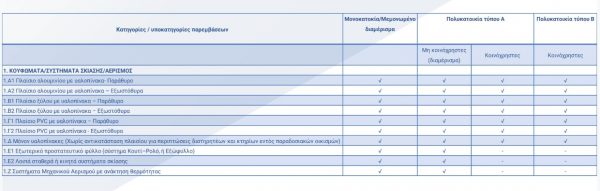
Στην εγκύκλιο του ΥΠΕΝ παρουσίαζονται αναλυτικές οδηγίες, πίνακες και στοιχεία για την εφαρμογή των νέων κανόνων.
Πηγή: https://www.buy2greece.gr/en