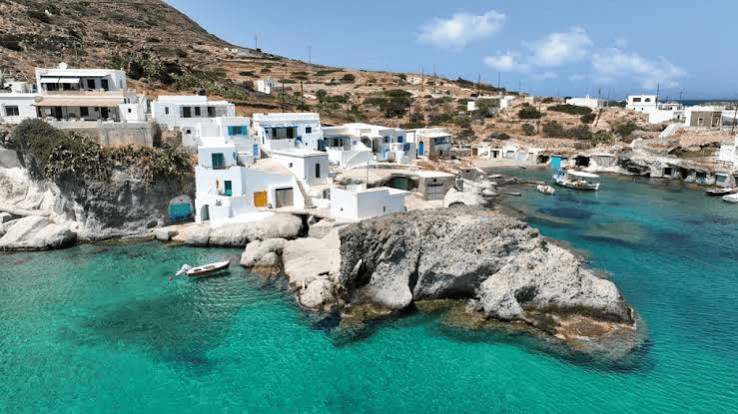
Just a short ferry ride from the popular island of Milos lies Kimolos, a destination that offers a very different experience of the Cyclades. Quieter, more authentic and largely untouched by mass tourism, Kimolos combines volcanic landscapes, crystal-clear waters, traditional architecture and a slower pace of life.
September is arguably one of the best times to discover the island. The sea remains warm after the summer months, the intense August crowds have subsided, and the milder temperatures make it ideal for exploring the island on foot and enjoying its natural surroundings.
For travellers seeking authenticity—and for those looking at the long-term potential of the Cycladic real estate market—Kimolos is a destination worth watching.
A Volcanic Island with a Distinctive Character
Kimolos is a volcanic island, and its geological origins are reflected throughout its landscape. Its characteristic grey-white rocks, natural hot springs and unusual geological formations give the island a distinctive identity.
Historically known as “Argentiera”, meaning “the Silver Island”, Kimolos has retained much of its traditional character while developing a growing appeal among visitors looking for a more peaceful alternative to some of the better-known Cycladic destinations.
Its proximity to Milos is another important advantage. The two islands are connected by a local ferry service, making it possible to combine the two destinations while allowing Kimolos to maintain its quieter atmosphere.
Chorio and the Medieval Castle
The island’s main settlement, Chorio, spreads across the slopes of Xaplovouni and is one of the best places to experience traditional Cycladic architecture.
Whitewashed houses, narrow lanes, arches and covered passages create an intimate atmosphere, while small courtyards filled with flowers add to the charm of the settlement.
At its heart lies the medieval Castle, dating from the 14th–15th centuries. The remains of the Inner Castle and the houses of the Outer Castle reflect the defensive architecture that once protected the island from pirate raids.
From the chapel of Pantokrator at the top of the hill, visitors can also enjoy impressive views towards Milos.
Chorio is also home to the island’s Archaeological and Folklore Museums, offering visitors an insight into Kimolos’ history and local traditions.
Unique Landscapes and Geological Wonders
One of Kimolos’ most recognisable natural landmarks is Skiadi, an unusual rock formation shaped like a mushroom.
Created by the natural erosion of softer rock beneath a harder upper layer, Skiadi stands on an open plateau and has become one of the island’s most distinctive geological sights.
Such landscapes highlight what makes Kimolos different from the more conventional beach-focused destinations of the Cyclades: the island offers a combination of sea, geology, hiking and cultural heritage.
Beaches, Thermal Springs and Traditional Fishing Villages
Kimolos’ coastline is another of its greatest attractions.
The beach of Ellinika offers visitors the opportunity to explore traces of the ancient city beneath the shallow waters, while Prassa is known for its turquoise sea and bright white sand. Thermal springs near Prassa add another element to the island’s natural appeal.
At Goupa, a traditional fishing village, visitors can see the characteristic syrmata—small caves carved into the rock by fishermen to shelter their boats during the winter months.
Other beaches, including Aliki and Mavrospilia, provide quieter alternatives for swimming and enjoying the island’s coastline, particularly outside the peak summer period.
Discovering Polyaigos by Sea
The experience of Kimolos extends beyond the island itself.
Boat excursions provide access to secluded coastal areas, sea caves, volcanic formations and natural hot springs that are difficult or impossible to reach by land.
Just a short distance offshore lies Polyaigos, an uninhabited island and one of the largest uninhabited islands in the Aegean. Its protected natural environment, rare flora and fauna and spectacular beaches make it an important part of the wider maritime landscape surrounding Kimolos.
This proximity to Polyaigos adds further potential for sailing, private boat excursions and nature-based tourism.
Hiking and Experiencing the Island at a Slower Pace
Kimolos is also well suited to travellers who want to explore beyond the beaches.
The island features numerous rural paths connecting different parts of the landscape. September, with its milder temperatures and softer sunlight, provides particularly favourable conditions for walking and discovering areas that cannot be reached by car.
This combination of hiking, nature, traditional settlements and coastal scenery makes Kimolos increasingly attractive to visitors interested in slow travel and authentic island experiences.
A Different Kind of Cycladic Tourism
Kimolos does not compete with the major Cycladic destinations on the basis of nightlife or large-scale tourism infrastructure.
Its appeal lies elsewhere.
The island offers privacy, authenticity, natural beauty and a slower lifestyle—qualities that are increasingly valued by travellers seeking alternatives to overcrowded destinations.
This positioning can also be significant from a real estate perspective.
As demand for authentic Greek island experiences continues to evolve, destinations that preserve their character while offering quality accommodation and accessibility can attract interest from buyers looking for holiday homes, boutique hospitality opportunities and long-term lifestyle investments.
The Real Estate Potential of Kimolos
For the real estate market, Kimolos represents a particularly interesting niche within the Cyclades.
The island’s limited scale, traditional architecture and protected natural environment naturally favour small-scale, high-quality developments rather than mass construction.
Traditional houses, renovated island residences, plots with views and properties suitable for boutique accommodation can appeal to buyers who value exclusivity and authenticity over large-scale resort infrastructure.
The island’s proximity to Milos is an additional advantage, allowing visitors and property owners to enjoy access to a much larger tourism destination while maintaining a more peaceful base in Kimolos.
As sustainable and experiential tourism becomes increasingly important, the long-term appeal of places such as Kimolos may lie precisely in what they have chosen not to become.
Kimolos: Authenticity as Its Greatest Asset
Kimolos offers a rare combination of natural beauty, traditional Cycladic architecture, geological interest and a genuine sense of place.
September reveals the island at its most relaxed: the waters remain warm, the landscape is easier to explore and the atmosphere becomes considerably quieter after the peak summer season.
For travellers, it is an invitation to experience the Cyclades at a slower pace.
For property buyers and investors, it is a reminder that some of Greece’s most interesting destinations are not necessarily the largest or most famous ones.
Kimolos’ greatest asset may be its authenticity—and preserving that authenticity could be the key to its future as a premium, sustainable and increasingly sought-after Cycladic destination.
 Buy2Greece.com
Leave a comment