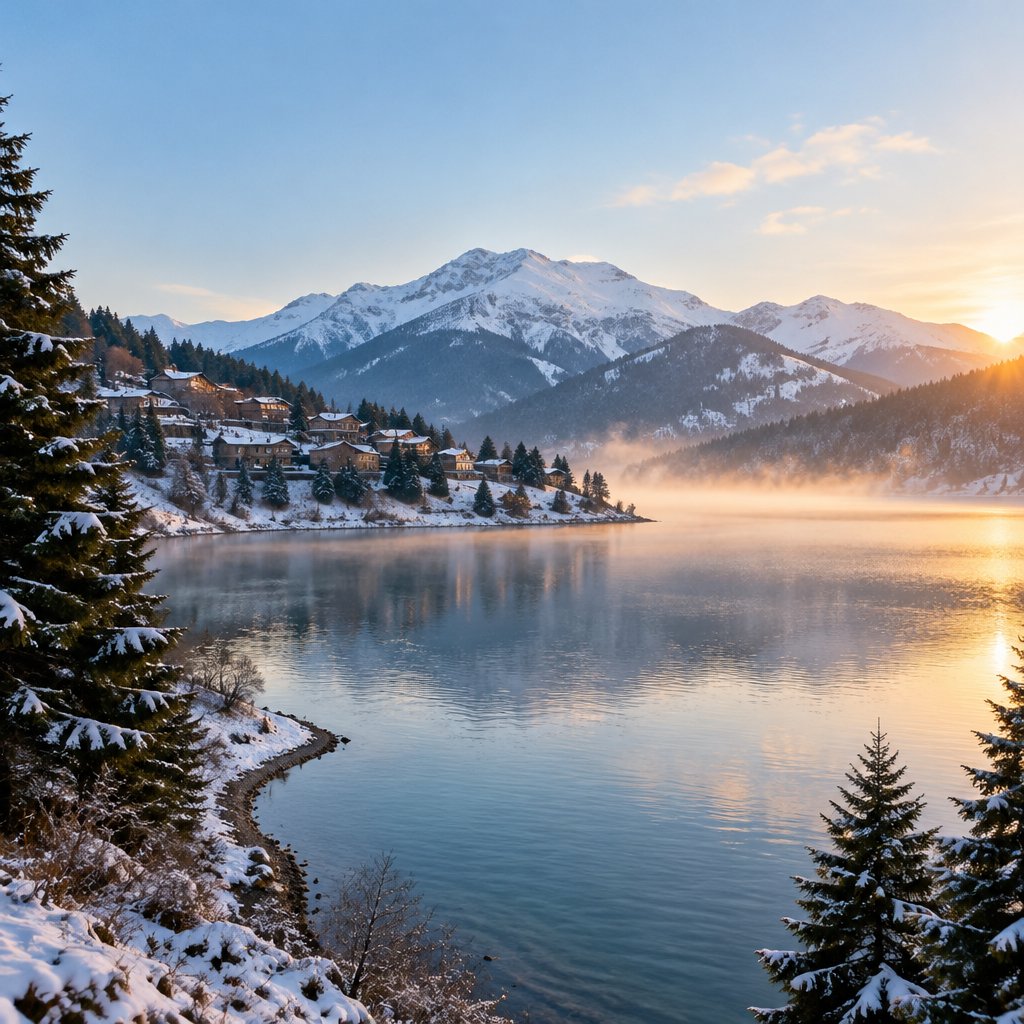
Welcome the New Year surrounded by snow-capped mountains, picturesque villages, traditional guesthouses and breathtaking views of the Agrafa mountain range.
Nestled in the mountains of central Greece, Lake Plastiras is one of the country’s most enchanting winter destinations. With its peaceful atmosphere, traditional settlements and spectacular natural scenery, it offers an ideal escape for those looking to experience a different side of Greece during the festive season.
As December arrives, mist often rises from the lake and drifts across the surrounding fir-covered slopes. When the clouds clear, the snow-covered peaks of the Agrafa Mountains emerge, creating an impressive winter landscape. It is the perfect setting for a relaxing New Year’s getaway, away from the noise and crowds of the city.
Lake Plastiras: A Unique Mountain Destination
Lake Plastiras is an artificial lake created in 1959 following the construction of a dam on the Tavropos River, also known locally as Megdovas. Covering approximately 24 square kilometres, it is surrounded by forested mountains and traditional villages built along the hillsides.
The lake is located approximately 25 kilometres from Karditsa, 330 kilometres from Athens and 255 kilometres from Thessaloniki, making it accessible for both short breaks and longer holidays.
During winter, visitors should be prepared for winding mountain roads and possible snowfall. Snow chains may be necessary when weather conditions require them.
The Most Beautiful Villages Around the Lake
The villages surrounding Lake Plastiras each offer a different atmosphere, from lively settlements with tourist facilities to secluded mountain hideaways.
Neochori is the largest village in the area and one of the most popular accommodation choices. Built amphitheatrically at an altitude of approximately 950 metres, it offers magnificent panoramic views across the lake. Visitors will find a good selection of traditional tavernas, cafés and guesthouses.
Kalyvia Pezoulas, situated close to the lakeshore, is particularly attractive for outdoor activities. It is an excellent starting point for lakeside walks, canoeing, kayaking, pedal boating and archery.
Kerassia is another picturesque mountain village, also located at around 950 metres, while Kryoneri, at 850 metres, is surrounded by dense fir forests and offers a peaceful atmosphere.
For those seeking spectacular scenery, Neraida, at an altitude of 1,120 metres, is particularly appealing, with beautiful views over the lake. Higher up, Filakti, at 1,017 metres, provides an impressive backdrop of snow-covered mountain peaks.
Meanwhile, Belokomitis is an excellent choice for visitors who prefer tranquillity and a closer connection with nature, with the surrounding forest extending almost to the village houses.
Traditional Guesthouses and Cosy Winter Evenings
One of the greatest attractions of Lake Plastiras during the Christmas and New Year period is its traditional accommodation.
Small, family-run guesthouses, often featuring fireplaces and warm hospitality, create an inviting atmosphere for winter holidays. Celebrations frequently revolve around the fireplace, accompanied by local wine, tsipouro and traditional conversations that continue late into the evening.
Due to the popularity of the destination during the festive season, accommodation should be booked well in advance.
Discover the Other Side of the Lake: Wine, Tradition and History
The eastern side of Lake Plastiras offers a different perspective, combining traditional village life with local gastronomy and cultural heritage.
Mesenikolas is one of the area’s larger villages and is particularly famous for its local red wine, produced from the indigenous Mavro Mesenikola grape variety. The wine holds a Protected Designation of Origin (PDO), while the village is also known for its traditional tsipouro.
Visitors can explore the small Wine and Vine Museum to discover more about the area’s winemaking traditions.
Nearby, Morfovouni, the birthplace of Greek military and political figure Nikolaos Plastiras, is another interesting stop. The village overlooks the Thessalian plain and is home to the Nikolaos Plastiras Historical Research Centre, which preserves valuable archival material documenting his life and career.
Historic Monasteries Worth Visiting
Beyond its natural beauty, the Lake Plastiras region is also home to important religious monuments with centuries of history.
The Monastery of Panagia Pelekiti
Located near the village of Karitsa, this impressive monastery is built into a steep rocky hillside. According to local tradition, the craftsmen carved the rock using wooden tools following the instructions of the Virgin Mary, giving the monastery its distinctive name.
Its foundation is believed to date back to the late 15th century, while its construction was completed in 1529. The monastery’s courtyard offers magnificent views across the surrounding landscape.
The Monastery of Korona
Situated in a lush green setting at an altitude of approximately 800 metres, the Monastery of Korona has an even longer history, traditionally dating back to 1123.
According to historical accounts, its origins are associated with the discovery of an icon of the Virgin Mary. The monastery was built over the remains of an ancient temple and later reconstructed during the 16th century.
One of its most remarkable features is its beautifully preserved carved iconostasis, dating from that period. The monastery is also connected with Saint Seraphim, whose relics are preserved there.
Hiking and Outdoor Activities in the Agrafa Mountains
The area around Lake Plastiras is an excellent destination for nature enthusiasts, offering hiking routes suitable for different levels of experience.
Some of the recommended trails include:
- Morfovouni – Agios Georgios Springs: A relatively easy 2.2-kilometre walking route, ideal for a relaxed outdoor excursion.
- Morfovouni – Mount Gazi – Mesenikolas: A 4.3-kilometre route combining mountain scenery and traditional settlements.
- Gavel – Filakti: A more demanding trail recommended for hikers with good physical condition.
- Belokomitis – Karagianni Ridge – Agia Paraskevi – Koulia – Karamanolis Mountain Refuge: A longer mountain route offering an opportunity to explore the natural landscape of the Agrafa region.
- Kalyvia – Neraida: A shorter alternative for those looking for a more relaxed walk.
During the winter months, visitors are advised to check local weather and trail conditions before setting off, as snow and muddy paths can make certain routes more challenging. Horse riding is another way to explore the surrounding countryside for those with the appropriate experience.
Lake Plastiras: More Than a Winter Holiday
Lake Plastiras is a destination where nature, tradition, history and outdoor activities come together. Whether enjoying a peaceful evening beside the fireplace, discovering historic monasteries, tasting locally produced wine or exploring mountain trails, visitors can experience an authentic side of the Greek countryside.
Its combination of traditional architecture, impressive mountain scenery and year-round natural attractions also makes the wider region particularly interesting for those exploring opportunities in Greece’s countryside and mountain property market.
At Buy2Greece, we believe that discovering Greece means looking beyond its famous islands and coastal destinations. Places such as Lake Plastiras reveal the country’s exceptional diversity and the unique lifestyle opportunities offered by its mountain regions.


Leave a Reply